
(Adapted from my Resilient Faith: Standing Strong in the Storms of Life Book project)
By John Thurman, M.Div., M.A.
A night watch that never ends — a personal story
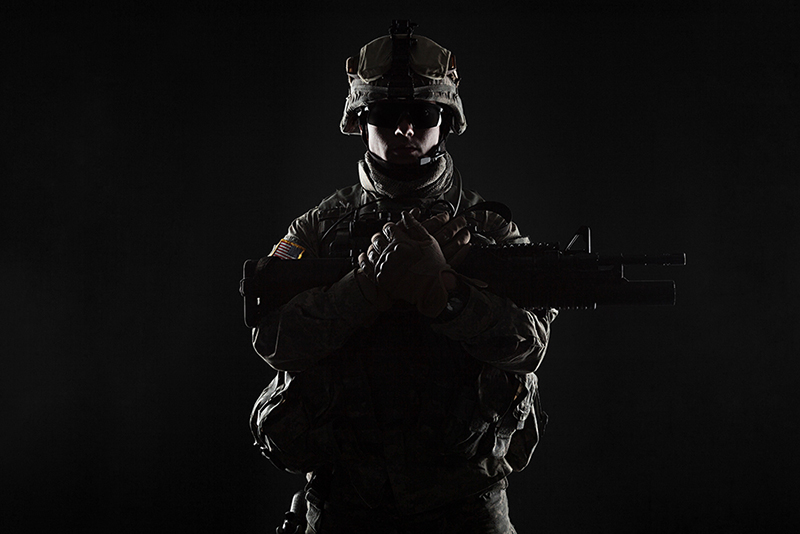
I still remember standing on my first time on watch. It was a field training exercise at Fort Bragg, North Carolina, in 1971. The perimeter was pitch black, and the silence felt heavier than the gear on my back. I stood there, eyes straining into the dark, scanning for any sign of the aggressor force. A snapping twig or a shifting shadow wasn’t just a noise; it was a jolt of adrenaline that lit up every alarm system in my body.
My job was to detect the aggressors before things got out of hand. I was hyper-vigilant. I was alive. But I was also wound up. While it was only a training exercise, it was my first night watch.
What the Sentry is: Amygdala and Negativity Bias
You may never have worn a uniform or stood a post in the middle of the night, but you know this feeling. You have a Sentry of your own. Deep in the temporal lobe of your brain sits the amygdala — your internal watchman. Like I scanned the tree line, your Sentry scans your marriage, your children’s future, your job, and the newsfeeds, looking for the signal that disaster is coming.
Neuroscience calls this a negativity bias. The brain is Velcro for bad experiences and Teflon for good ones. Ten compliments float away while one criticism sticks. That bias kept our ancestors alive; it now holds many of us exhausted. In today’s article you are going to learn howm to retain your brain.
Why Anxiety isn’t a Sign of Failed Faith
If you’re a Christian, it’s easy to hear that little voice saying, “If I really trusted God, I wouldn’t be like this.” That response is harsh and unhelpful. Your Sentry isn’t failing; it’s biology doing its job. The problem is not that you’re weak; the problem is that your internal guard is wired for threats that look very different now than they did for ancient humans.
That’s hopeful news. If this is partly biology, it’s something we can understand, work with, and change. Scripture and science are not at odds here. Paul’s call to “be transformed by the renewing of your mind” (Romans 12:2) echoes what modern research calls neuroplasticity — the brain’s ability to rewire itself. God shows us in the Word jus thow we can retrain our brain.
How the Sentry shows up in everyday life
The Sentry looks for predictability. When facts are missing, it fills the blanks with worst-case scenarios:
- Husband is late: “Car wreck.”
- Boss sends a vague email: “I’m getting fired.”
- Teen is quiet: “Somethiings wrong, maybe they need therapy.”
We doomscroll because the Sentry believes knowing the threat helps us survive. But the Sentry can’t tell time. It treats a vague email like a tiger – releasing adrenaline and cortisol as if immediate physical action were possible. That chemical surge has nowhere to go in modern life, so it buzzes through our chests, keeping us tense and tired.
Quick, Immediate Steps to Calm the Alarm and Train Your Brain
You don’t have to argue with the Sentry when it sounds the alarm. You can give it new orders — small, practical steps that quiet the threat response and create space for faith. Here are five crucial steps to take when it’s time to retrain your brain:
- Name it. Notice the alarm and say quietly: “That’s my Sentry.” Naming reduces the brain’s panic response and gives you a little distance.
- Breathe a Tactical Prayer. Try this simple breath-prayer using 2 Timothy 1:7: Inhale 4 seconds — “God, you have not given me a spirit of fear.” Exhale 4 seconds — “But of power, love, and a sound mind.” Repeat until the body settles.
- Ground the facts. Ask: What do I actually know right now? What am I assuming? Replacing imagined catastrophes with concrete facts pulls the Sentry back from worst-case thinking.
- Move. A short walk, a few shoulder rolls, or a minute of stretching helps metabolize adrenaline. Movement tells your brain you are not in immediate physical danger.
- Reach out. Say something brief to a trusted friend or your small group: “My Sentry is loud right now. Can I pray with you or get your perspective?” Connection reminds the Sentry you aren’t alone.
Where Hope Begins – Retraining the Sentry
This work isn’t about silencing the Sentry — it’s about retraining it. The goal isn’t to eliminate vigilance; it’s to keep the watch without living in terror. That’s where spiritual habits meet neuroscience.
Neuroplasticity shows that repeated practices change neural pathways. Scripture calls this “renewing of the mind.” The two together form a practical roadmap: disciplined, repeated spiritual practices reshape how your brain responds to stress.
Start small and steady. Memorize one verse that counters your most common worry. Journal one thing you saw God do today. Practice the breath-prayer every time your Sentry wakes you at night. Over time, those actions become new highways in your brain, not just admirable intentions. And as you take those small and steady action you will retrain your brain’
A brief plan for this week
- Morning: Read and write one short truth from Romans 12:2.
- Midday: Take a five-minute movement break; repeat the breath-prayer once.
- Evening: Journal one instance where God’s goodness showed up (aim for five small things when faced with a setback).
You don’t have to do everything at once. Small, repeated steps are the repair kit for the soul and the brain.
Where to go next. If this feels like relief — like someone finally handed you a flashlight in the dark — keep going. Your Sentry is not your enemy. It’s a faithful guard that can learn new orders. With clear practices, patient repetition, and the presence of other believers, you can begin to live with vigilance without being paralyzed by fear.
May the Lord bless you as you learn to deal with your Sentry while you retrain your brain!


Well written advice, John! Great scriptures shared! The BEST help is God’s Word!!