What Does Biblical Hope Really Look Like?
By: John Thurman M.Div., M.A., LPCC
After fifty years in ministry and counseling, I've found that when life falls apart, people don't need more clichés. They need something real they can hold on to.
A few years back, I worked on a mental health team in the Democratic Republic of Congo. We were there to see how the growing political unrest was affecting both American staff and local employees. The area had faced numerous security alerts, shelter-in-place orders, and considerable uncertainty in recent months.
While I was there, I met an incredible woman I'll call Nichole.
She asked to meet with me because the political tension was bringing back fears she thought she had left behind years ago.
We spoke through a translator, and she gradually opened up about her story.
Years before, during a violent uprising, rebels killed her husband and two of her children. Left alone and afraid for her other children, she turned to her pastor and church elders for guidance. They prayed together, asking God for wisdom about her next steps.
They believed God was leading her to leave her village and make the dangerous journey north.
Then she shared something I'll never forget.
With her two surviving children, she walked more than 500 kilometers, or over 300 miles, through the Congolese countryside.
To keep from being attacked, captured, or raped, they often slept in the bush. Occasionally, they came upon small villages where fellow believers offered them food, encouragement, and a safe place to rest before continuing their journey.
Nicole eventually made it to Goma. There, she started helping other women who had faced violence and loss. Over time, God opened new doors for her, and that journey led her to the role where I met her years later.
Looking back, I saw that the woman who once needed hope so badly had become someone who quietly helped others.
I listened, amazed by how strong and steady she was.
I asked her,
Nichole...how did you survive all of that? How did you endure the loss of your husband and children, walk over three hundred miles, and somehow keep moving forward?
She became noticeably quiet, as if she were digging deep for an answer to my question.
After a long pause, she looked at me and asked, "May I ask you a question?
Are you a Christian?" I said yes. Her shoulders relaxed, and she smiled.
Then she looked directly into my eyes. "Then you'll understand when I tell you that my only hope is in Jesus." In that moment, I realized I wasn't simply listening to a survivor's story. I was witnessing what biblical hope looks like when it has been tested by fire.
For a few moments, our different cultures, languages, and life experiences faded away. What we shared was our faith in Jesus Christ.
Then she said something I've remembered ever since.
"After I lost my husband and my boys, I decided I would trust Him with what I had left. My pastor and my church taught me to put my hope in God. Looking back, it was my hope in Jesus that kept me going forward."
"My only hope is Jesus."
Hope is More Than Something We Study
I've never forgotten that conversation. Even after listening to thousands of life stories, I still find myself thinking back to that morning in the DRC. Some stories inform us. A few quietly change the way we see God at work. Nichole's story did that for me. Nichole gave me something no professor, seminar, or textbook ever could.
Biblical hope isn't just something we study. It's something we live out.
One lesson life has taught me is this:
Storms don't create resilient faith. They reveal the faith we've been building all along. Long before the first clouds gather, God is quietly strengthening our trust through ordinary acts of obedience, prayer, and dependence upon Him.
Perhaps that's why the writer of Hebrews could write with such confidence:
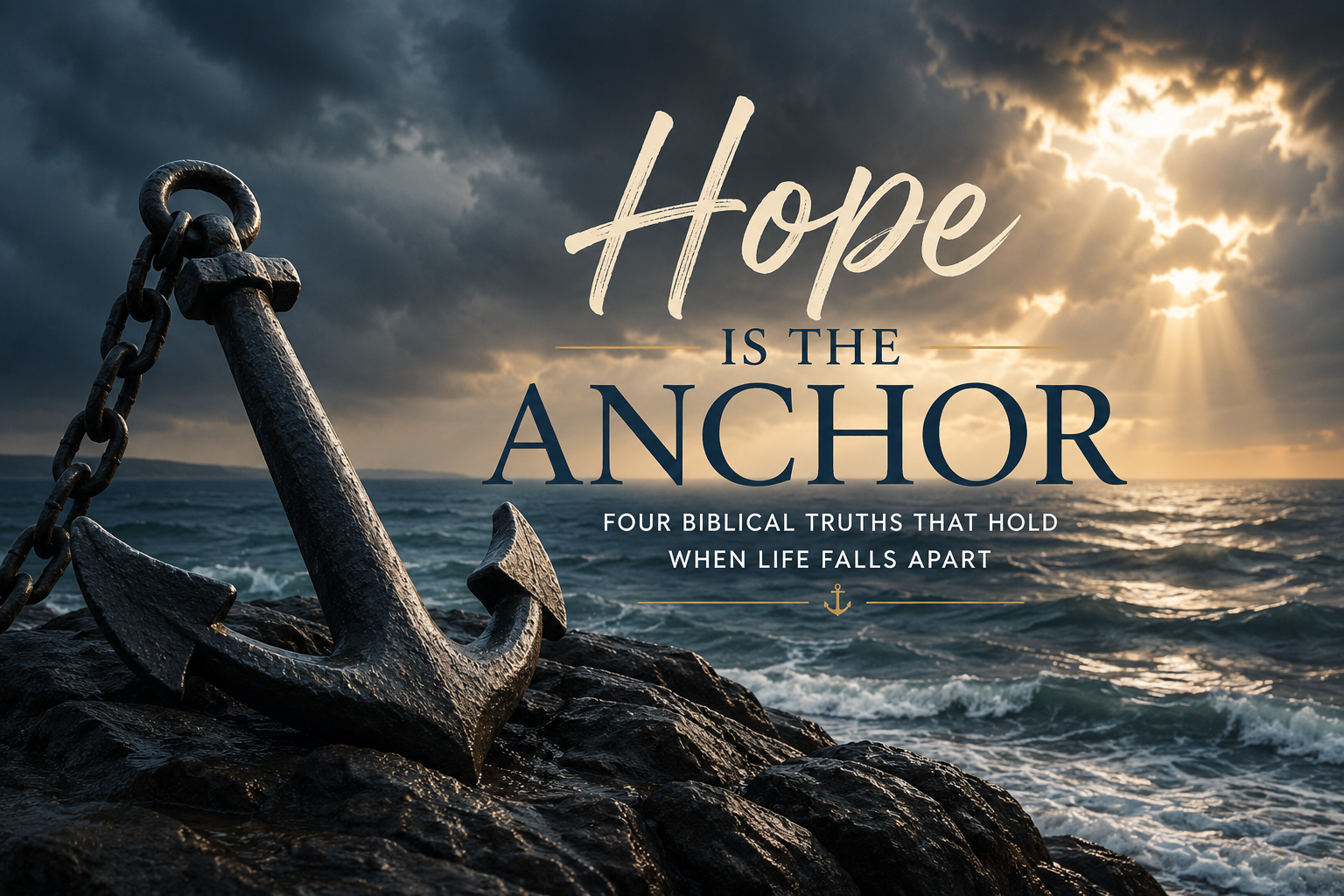
"We have this hope as an anchor for the soul, firm and secure..." (Hebrews 6:19)
Anchors don't stop storms.
They keep us from drifting when the storm is raging.
Why Is Biblical Hope Different?
If you ask ten people what hope means, you'll probably hear answers that sound something like this:
"I hope things get better."
"I hope everything works out."
"I hope my team wins."
"I hope the weather cooperates."
There is nothing wrong with those expressions. We use them every day. But in each case, hope means wishing for a positive result.
But the Bible means something different when it talks about hope.
Biblical hope isn't wishful thinking, nor is it pretending things will work out. It's a steady confidence that God will keep every promise He's made, because His character never changes.
Our situations can change. Our emotions go up and down. Our plans might fall apart. The future can feel uncertain.
But God remains faithful.
One of the primary ways God builds resilient faith is by teaching us to trust His character instead of our circumstances.
Christian hope goes much deeper than just being optimistic.
Optimism says,
"I think everything will work out."
Biblical hope says,
"Even if everything doesn't unfold the way I hoped, I know God will remain faithful."
One kind of hope depends on circumstances. The other depends on God's character. One changes with life's ups and downs. The other stays steady because it's anchored in Christ.
Hope doesn't ignore the storm. It gives us the courage to face it because our anchor is stronger than anything the storm can bring. That's the hope Nicole found, and it's the same assurance God offers us today.
"Hope is confidence in the unchanging character of a faithful God."
Four Biblical Truths About Hope
1. Hope Allows Us to See Today's Struggles through tomorrow's promises.
One of the hardest things about tough times is that our vision gets smaller. Pain can make us think this moment is all there is. Hope gently lifts our eyes so we can see our lives through the larger story God is writing.
The Apostle Paul understood suffering as well as anyone. He endured persecution, imprisonment, rejection, and hardship. Yet he could still write about hope because he viewed his circumstances through the larger story of God's faithfulness.
Romans 5 reminds us that suffering produces perseverance, perseverance produces character, and character produces hope.
That kind of growth doesn't happen overnight. It comes as we keep trusting God, one day at a time.
Hope reminds us that today's struggle is just one chapter, not the end of the story God is writing.
2. God's Promises Become the Anchor Beneath Our Emotions
Feelings are real, but they don't make good anchors.
Some mornings we wake up feeling confident. Other days, fear shows up before we even get out of bed. If our hope depends on our feelings, we'll end up on an emotional roller coaster.
God gives us something much stronger. He invites us to anchor our hearts in His promises.
Abraham waited. Joseph endured. David trusted. Paul persevered.
Their situations changed, but God's character never did.
So where is your heart anchored today? No matter what you're facing, God's promises are a much safer anchor than your emotions.
3. Endurance Is Hope with Work Clothes On
Over the years, I've discovered that resilient faith isn't formed during the storm. More often, it is formed long before the storm ever arrives.
People who lose hope often stop moving forward. But those who find hope start taking the next faithful step.
Then another.
Then another.
Hope doesn't take away the difficulty. It changes how we go through it.
Every time we trust God's promises instead of our fears, our anchor grows a little deeper.
"Hope doesn't take away the difficulty. It changes how we go through it."
4. Resilient Faith Is Formed One Faithful Decision at a Time.
Hope is so much more than just positive thinking.
It's one of God's main ways of building resilient faith.
When we spend our time in Scripture...
When we pray honestly...
When we worship...
When we gather with other believers...
When we intentionally remember God's faithfulness...
Christ is quietly strengthening the anchor of our souls below the surface.
Most days, we don't notice it. Then life changes, and a storm comes.
That's when we realize God has been preparing us all along. Hope isn't about believing life will get easier.
Hope is confidence in the unchanging character of a faithful God.
Three Daily Practices That Strengthen Biblical Hope
Resilient faith is rarely formed in one dramatic moment. More often, it grows quietly through small, faithful choices made day after day. God has given us ordinary means of grace through which He strengthens our hope and prepares us for life's storms.
Looking back, I've noticed that God usually builds resilient faith before we realize we need it. He does His deepest work through ordinary habits, like opening His Word, honest prayer, worship, and walking with other believers. These simple practices may seem ordinary, but over time, the Lord uses them to build extraordinary resilience.
Fill Your Mind with God's Truth
When life feels uncertain, our minds often replay our fears. Scripture gently shifts our focus to something much more dependable: God's unchanging character and His faithful promises.
One of the most practical ways to strengthen biblical hope is to spend unhurried time in God's Word. The Holy Spirit uses God's Word not simply to inform our minds but to transform our hearts and renew the way we think. Over time, God's promises begin to speak louder than our fears.
Spend enough time in God's Word so that His promises become more familiar than your fears.
Bring Your Heart Honestly Before God
Hope doesn't grow by pretending everything is fine. It grows when we honestly bring our fears, disappointments, and questions to God.
Some of the most hope-filled prayers in the Bible started with deep honesty. Our struggles don't scare God. He invites us to bring them to Him.
Our circumstances may not change.
But our outlook often does.
Honest prayers are often where hope begins to grow.
Walk with Others Who Will Strengthen Your Faith
God never meant for us to build resilient faith alone. Throughout Scripture, He uses His people to encourage, comfort, challenge, and remind one another of His faithfulness.
When times are hard, we often want to pull away. But hope calls us to move toward a trusted Christian community instead.
Sometimes another believer can see God's faithfulness before we do.
Sharing hope with other believers makes it stronger.
"Sometimes another believer can see God's faithfulness before we do."
Field Note
One observation continues to stand out to me. Dramatic moments seldom build resilient faith. More often, it grows quietly through ordinary acts of obedience and faithfulness.
Opening God's Word. Offering honest prayer. Choosing not to walk alone.
None of those moments seemed extraordinary. But over weeks, months, and years, Christ uses those simple acts of faithfulness to strengthen our anchor, often preparing us for storms we never expected.
Don't overlook today's small act of faithfulness. Christ never does.
This Week's Invitation
If you're going through a hard time right now, try to set aside ten minutes sometime this week.
Read Hebrews 6:19.
"This hope is a strong and trustworthy anchor for our souls. It leads us through the curtain into God's inner sanctuary."
Then ask yourself a simple question: Am I anchoring my hope in today?
Before you close your Bible, thank God for one sign of His faithfulness, even if your situation hasn't changed.
Building resilient faith means taking one faithful step at a time.
A Prayer for the Journey
Heavenly Father,
Thank You for being the unchanging anchor of my soul.
When my circumstances feel uncertain, remind me that Your character never changes. Help me trust Your promises more than my fears and keep my eyes set on You rather than on the surrounding storms.
Strengthen my hope through Your Word. Deepen my faith as I spend time with You in prayer. Surround me with people who will encourage, challenge, and help me continue following You faithfully.
Give me the courage to take the next faithful step today, even when I cannot see the entire road ahead. I believe that You are gently shaping resilient faith within me—one day, one choice, and one act of obedience at a time.
May my hope rest securely in You alone, knowing that You are always faithful and that You will never leave me or forsake me.
In the strong and faithful name of Jesus, Amen.
Continue the Journey
If this article encouraged you, I'd love to keep walking this journey with you.
Every week, I share practical, Scripture-based encouragement to help believers build resilient faith for everyday challenges.
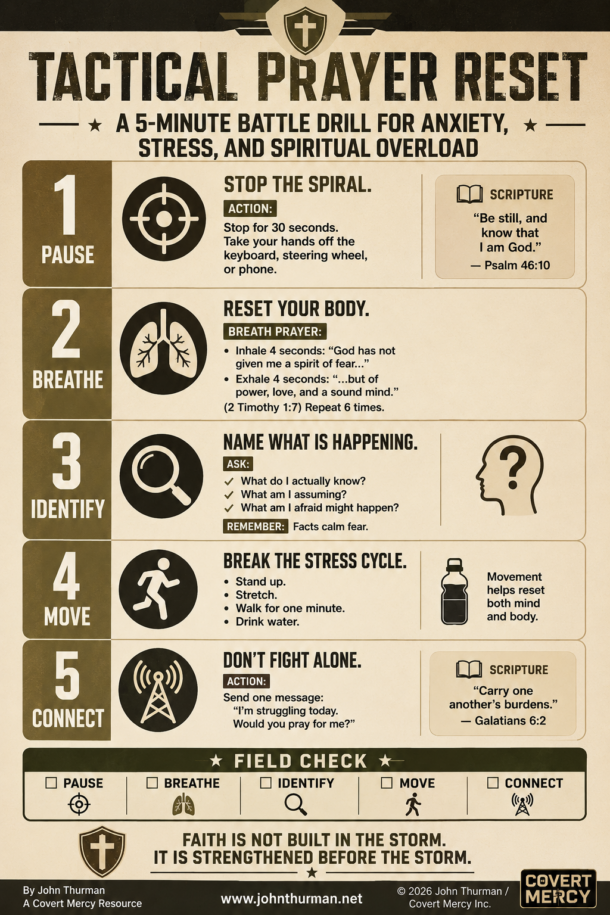
As a thank you for joining my email community, I'd also like to send you a free copy of my Tactical Prayer Reset Field Card. It's a practical resource to help you refocus on Christ when life feels overwhelming.
Just enter your email when the invitation pops up on my website, and I'll send it to you.
Remember, storms are going to come. But drifting doesn't have to.
I would personally love to hear from you. I will read and respond.
May you sense the Lord's Presence in a special way this week,
John Thurman
#
Links:
Standing Strong Before the Storm – Blog
3 Faith Habits - Podcast
Want a Practical Tool for Difficult Moments?
When stress, fear, or pressure starts taking over, it helps to have something simple you can actually use. My free Tactical Prayer Guide offers Scripture-grounded, practical steps to help you slow down, refocus, and take your next faithful step.