
By John Thurman, M.Div., M.A., LPCC
Let’s imagine for a moment that you’re going to grade your current ability to manage your thoughts and steer yourself in a positive, uplifting direction. How would you grade yourself?
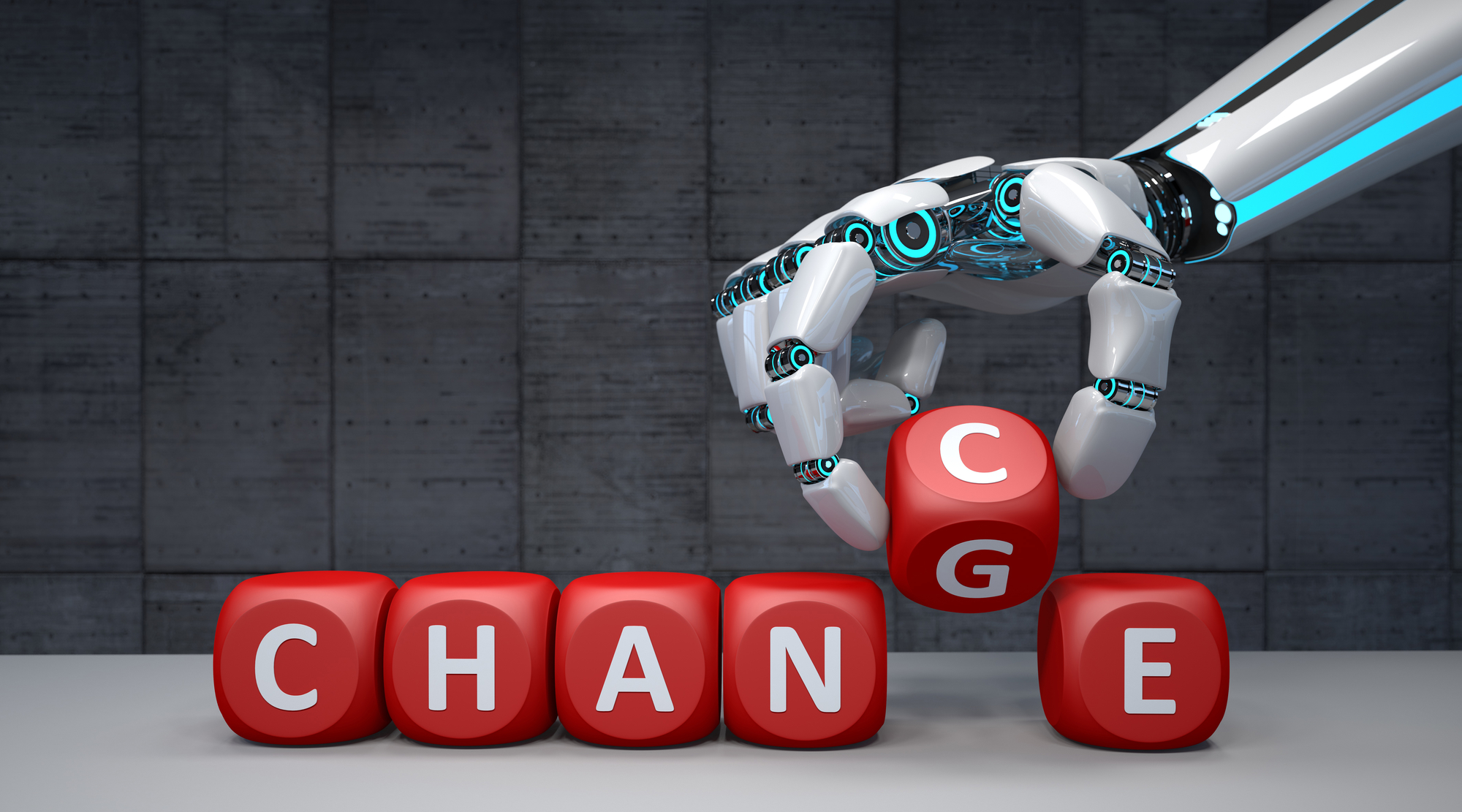
Do you hit replay every time you have a regret, make a mistake, or take a wrong step? If you do here are some proven tips you can use to turn those thoughts around and get your mind going in the right direction. Here is an important tip, nobody else is going to do it for us. You can choose to change your thoughts and change your life!
Let’s pretend for a second that you are going to have to grade your current ability to manage your thoughts and move yourself if a positive, edifying direction. How would you grade yourself?
If your grade isn’t where you want it to be, read on.
2 Principles
There are four simple, practical things you can do to boost your self-esteem. If you want to see a big shift in your life, you can learn to change your thoughts and change your life. Give these tools a try. Before I get into them, I want to mention two principles that should be operating in the background as you implement these new ways of thinking.
The first is resistance. This sounds odd, but developing resistance means that, as you try new things, it will be easy to quit. Resistance lets you expect moments when you won’t want to do the work. Still, you’ll do it anyway. You’ll resist the urge to return to old thinking and habits. Over time, you’ll see powerful, positive changes as you learn to change your thoughts and your life.
Resistance refers to the ability of an individual, a group, an organization, or even an entire population to literally resist manifestations of clinical distress, impairment, or dysfunction associated with critical incidents, terrorism, and even mass disasters. Resistance may be thought of as a form of psychological/behavioral immunity to distress and dysfunction. [i]
The second is resilience. Resilience is a naturally occurring tool that most people have in their mental toolbox. Resilience, according to Dr. George Bonanno, is a naturally occurring tool that most people have always had in their psychological locker, and which is enhanced or weakened by experience and circumstances. In a nutshell, resilience is the power to overcome adversity, trauma, and low self-esteem and to be strengthened.
Resilience refers to the ability of an individual, a group, an organization, or even an entire population to rapidly and effectively rebound from psychological and/or behavioral perturbations associated with critical incidents, terrorism, and even mass disasters[ii]
Here are four tips to boost your self-esteem as you learn to change your thoughts and change your life!
Tip # 1 – Supervise your self-talk.
Right now, whether you realize it or not, you are having a running conversation with yourself. Here is the question: Is it a productive conversation or an energy-stealing one? If the discussion is positive and hope-filled, you are creating and sustaining a favorable view of yourself. If you are negative, you undermine your self-worth. You diminish the fact that God says you are fearfully and wonderfully made.
In their book The Answer, business authors John Assaraf and Murray Smith discuss the negative messages children receive growing up. They write,
By the time you’re 17 years old, you’ve heard “No, you can’t” an average of 150,000 times. You’ve heard “Yes, you can” 5,000 times. That’s 30 no’s for every yes, creating a powerful belief of “I can’t so why even try.”[iii]
Wow! That is a lot to overcome. If we want to change our lives, we need to change the way we think about ourselves. Ethel Waters, a famous jazz and gospel singer, whose birth was the result of her mother’s rape, spoke for us all: “I know I’m somebody ’cause God don’t make no junk.”
You need to learn to become your own encourager, your own cheerleader. Every time you do a good job, don’t just let it pass; give yourself a compliment. Every time you choose discipline overindulgence, recognize how much you are helping yourself. When you do make a mistake, don’t bring up everything that is wrong with yourself; tell yourself that you are paying the price for growth and that you will learn to do better next time. Every positive thing you can say to yourself will help.
Tip # 2 – Stop Comparing Yourself to Others.
Comparing yourself to others is a needless time and energy-sucking experience that only makes you feel bad. Your mission is to become better today than you were yesterday. You do that by focusing on what you can do today to improve and grow. Do that enough, and if you look back and compare the you of weeks, months, and years ago to the you of today, you should be greatly encouraged by your progress.
Tip#3 – Stretch your limiting beliefs.
Some of you might be saying something like, “When it comes to believing in myself, I am an agnostic.”
It is sad that too many people think this way about themselves. They don’t believe they can accomplish great things. But the most significant limitations people experience are those they impose on themselves. Businessman Charles Schwab said, “When a person has put limits on what they will do, they have put a limit on what they can do.”
Tip #4 – Build others up.
People with low self-esteem often see themselves as inadequate or feel like victims (which usually starts because they actually have been victimized in their past), and they over-focus on themselves. They can become self-protective and selfish because they feel they have to survive.
If this sounds a little close to home, one of the best ways to combat those feelings is to serve others and add value to their lives. Making a difference – even a small one – in the lives of others lifts one’s self-esteem. It is hard to feel bad about yourself when you’re doing something for someone else. Also, adding value to others makes them value you more. It creates a cycle of positive feelings
from one person to another.
Hoping that you will choose to have a Great Day! Looking forward to hearing from you and how you are learning to change your thoughts and change your life!
I would love to hear your comments!
[i]Everly, George S, Kamisnky, Michael, McCabe, Lee, and Langlieb, Alan (2007, December 7) An evidence-Informed Model of Human Resistance, and Recovery: The John’s Hopkins’ Outcome-Driven Paradigm for Disaster Mental Health. Brief Treatment and Crisis Intervention. Retrieved 8 April 2019, from http://triggered.edina.clockss.org/ServeContent?rft_id=info:doi/10.1093/brief-treatment/mhl015
[ii]Ibid.
[iii]Assaraf, John and Smith Murray (2008). The Answer (Kindle version) p 50. Retrieved from Amazon.com