You Are the Officer in Charge: Escaping the Victim Mentality and Owning Your Story
Summary & Key Takeaways
Ownership as a mark of resilient faith
This article draws from theology, psychology, and a military metaphor to make one main point: pain is real, but helplessness is a choice. The Grievance Narrative, which turns suffering into your identity, can hold you back from the future God wants for you. In this context, we’ll explore the victim-to-victor-christ perspective. You can recognize your wounds without letting them define your life. Taking on the Officer in Charge (OIC) role means facing harm, not accepting lasting helplessness, and taking responsibility for what happens next. Owning your life is a key part of resilient faith. Those who manage their responses with God’s help become stronger, wiser, and steadier in tough times.
Key takeaways:
- Validate pain; refuse to validate permanent helplessness.
- Distinguish innocent victims from a lasting victim mentality.
- Personal agency means owning what comes next, not what happened.
- The Parable of the Talents models stewardship and accountability.
- Coram Deo—living before God—turns daily habits into faithful responsibility.
- The rubble of your past is a building site, not a burial ground.
The Grievance Narrative
How pain becomes identity
Our culture often connects suffering with identity. This change can be subtle—a hurt turns into a label, and a difficult season starts to feel permanent. The Grievance Narrative suggests that your strength comes from repeating the story of your pain. While telling your story can feel safe or even justified, if left unchecked, it can shape your identity around your wounds rather than your purpose.
Validating pain vs. validating helplessness
As a therapist and chaplain, I never downplay abuse, betrayal, neglect, or grief. These wounds are real and important. The Bible shows that honest lament is allowed and that tears are not wrong. Caring about pain is different from accepting helplessness. Pay attention to your wounds, but don’t let them become your whole life. If you stay stuck in the idea that you are only your pain, you limit your potential to be a builder, leader, or steward—you see yourself only as hurt.
From Victim to Officer in Charge (OIC)
The OIC posture: assess, clear, rebuild
The Officer in Charge approach does not ignore suffering, but it also does not let suffering have the last word. Picture a commander walking into a damaged building. The commander did not cause the damage, but still has to assess the situation, clear the area, and rebuild. The OIC recognizes what went wrong, grieves the loss, and looks for justice when possible. Then, the key question becomes, “What do I do next?” This question moves your focus from blaming others to building your own sense of agency.
Small choices that form agency and resilient faith
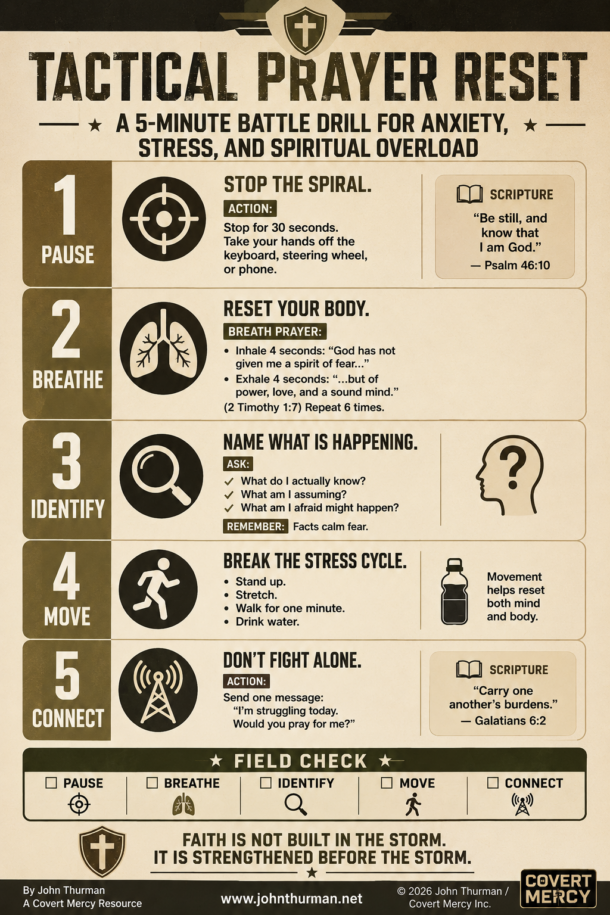
Becoming the OIC begins with small, practical steps, such as building daily habits, having a tough conversation, setting a boundary, or reaching out for counseling. These actions slowly change your identity from passive to active. Taking ownership is a sign of resilient faith because it means trusting God enough to act, take risks, be accountable, and keep going even when things are hard.
Biblical Framework & Coram Deo
Parable of the Talents: stewardship and accountability
The Bible never sees believers as passive. In the Parable of the Talents (Matthew 25:14–30), Jesus illustrates four aspects of biblical ownership: taking action, accepting risk, being accountable, and facing the consequences of your choices. The servants who took action were rewarded, but the one who hid his talent missed out. This story is not about earning God’s love, but about faithfully managing what God gives you.
Paul tells us to focus our minds on what is true, honorable, and pure (Philippians 4:8). Romans 12:2 encourages us to be changed by renewing our minds. Both of these are daily ways to take ownership of our inner life. Galatians 6:7 reminds us that our choices have results. What we plant today shapes our future.
Coram Deo practices that cultivate resilient faith
Coram Deo, which means living before God, helps make ownership a daily habit. When you see every choice as happening before God, your daily routines become moments of growth. Coram Deo can include a short morning prayer (“Lord, I live before You today”), quick confessions to stop reactive words, weekly check-ins, Sabbath rest, and short daily Bible readings. These habits do not stop failure, but they help you recover faster, grow in humility, and build resilient faith through steady practice.
Practical Next Steps
Daily habits, one-step rule, and accountability
If you are ready to take action, start with small and specific steps. Building ownership takes time and comes from steady habits.
Practical actions: • Morning prompt: “Lord, I live before You today.” A simple message that reorients the motive.
- One-step rule: pick one small next step each day—a call, a boundary, a journal entry. Small successes compound.
- Accountability buddy: weekly check-ins with someone honest and compassionate.
- Reframe statements: when you catch “This always happens to me,” replace it with “What can I These habits help you build resilient faith by teaching you to choose trust and responsibility, even when you feel like giving up. They train your will to choose trust and responsibility even when feelings push you toward passivity.
Closing: Step Up & Share Your Story
Invitation to reflect and list 3–5 helpful practices
Becoming the OIC takes courage and patience. It begins with a choice: don’t let the Grievance Narrative define you, be honest about your pain, and ask, “What now?” Then take one step forward in faith. You may still feel grief or cry, but that does not stop you from leading your life. The cross shows us that suffering matters, but it is not the end of the story. The broken pieces of your past can become building blocks in God’s hands. With God’s help, your story is not over—you are still being shaped.
If this message speaks to you, take action today. Share a short example, big or small, of how you have moved from feeling like a victim to taking ownership. Write down three to five habits, phrases, or actions that help you move forward. Your commitment might inspire someone else to start their own journey from brokenness to rebuilding. Don’t wait—take your step and share your story.
Leave a comment, I read and respond.
May the Lord bless you as you understand how to move from victim to victor in Christ.
Helpful Links